
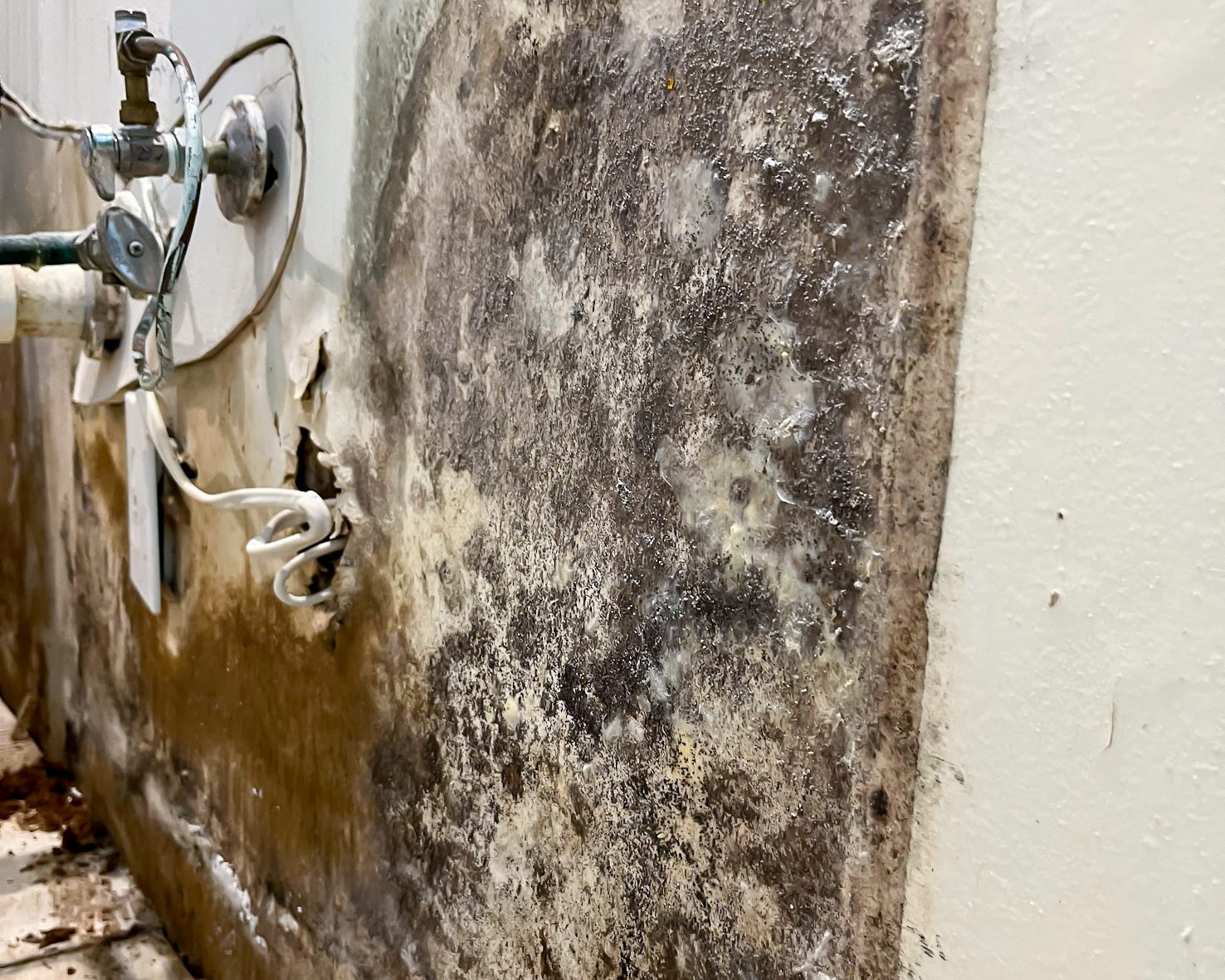
Mold after a leak, open 24/7: Mold after water damage
Water leak, now a musty smell? Call and we will help you work out what to do next.
Not an emergency? Book a free inspection
Mold after water damage: what to do in Miami
Mold needs moisture, and a water leak supplies it. In Miami heat and humidity, mold can begin growing in damp materials within about 24 to 48 hours. Dry the structure fast, do not paint or wipe over it, and call a crew if you see growth or smell mustiness after a leak.
How do I know mold is growing after a leak?
The signs are often smell first. A musty or earthy odor a day or two after a leak, especially in a closet, under a sink or in a room near the wet area, is the usual clue. Then look for dark, fuzzy or speckled spots on drywall, baseboards, ceilings and the back of cabinets.
Other signs include paint that bubbles or peels, drywall that feels soft, and stains that return after cleaning. Mold can also sit inside a wall where you cannot see it, which is why moisture readings matter more than a look from across the room.
What should I not do?
- Do not paint or caulk over a damp or stained area. It hides the problem and traps the moisture.
- Do not scrub or sand visible mold dry. It can spread spores through the home.
- Do not rely on a fan alone if the walls or ceiling above are still wet.
- Do not mix cleaning products. Some combinations give off dangerous fumes.
- Do not throw away damaged items before you photograph them for your claim.
Why does a leak turn into mold?
Water soaks into drywall, insulation, carpet padding and wood, and these materials dry slowly in humid air. Wet materials that stay wet are what mold feeds on. A small ceiling stain can mean the insulation above is soaked.
That is why drying the whole structure matters more than the visible spot. We find hidden moisture with a moisture meter, then dry the area with air movers and dehumidifiers. Wet material that cannot be dried is removed. Our mold remediation page covers what happens when growth is already present.
Will insurance pay for mold?
It depends on the policy. Coverage for mold is often limited or excluded, and insurers commonly look at whether the water came from a sudden, covered event and whether it was dried promptly. Your policy wording decides, so ask your insurer or adjuster how mold is treated.
Photographs, moisture readings and the date you found the leak help. See the water damage claim guide for what to document.
When to call
- A leak has been sitting for a day or more.
- You smell mustiness but cannot find the source.
- You can see growth on drywall, ceilings or baseboards.
- Walls or ceilings feel soft, bulge or stay damp.
- Anyone in the home has breathing trouble that seems to follow the damp area.
Common questions
How fast does mold grow after water damage?
Mold can start growing in wet materials within about 24 to 48 hours, particularly in Miami heat and humidity. Wet drywall, insulation and carpet padding are the usual starting points. Removing the water and drying the structure quickly is the best way to prevent it.
Can I just bleach mold and move on?
Surface wiping rarely solves it. If the material underneath stays damp, mold comes back, and porous materials such as drywall and padding can hold growth below the surface. Find and fix the moisture first. If you see growth, call a crew before you disturb it.
Is the musty smell after a leak mold?
Often it is a sign of moisture and early growth, though only an inspection can tell. A musty smell a day or two after a leak means something is still damp. We check with a moisture meter and tell you what we find.
Does homeowners insurance cover mold from a leak?
Policies differ, and mold coverage is often limited or excluded. A sudden, covered water event that is dried promptly is treated differently from a long-term leak. Your policy language decides, so ask your insurer or adjuster before work begins.
Related help
Prefer a callback?
Three quick answers. We call you.