
Hurricane Damage Restoration in Miami: What to Do After the Storm
Wait for the all clear, then check for safety hazards before anything else. Stay away from downed lines and floodwater, cover openings in the roof, and start water removal quickly. Moisture left in walls can turn into mold within 24 to 48 hours. Frontline crews are available around the clock.
Storm damage at your home or business? Call now and we will help you sort out what comes first.
Call now, any hour(305) 542-5253What is safe to do right after a hurricane?
Wait until local officials say it is safe to go outside. Then look before you touch anything. Downed power lines, standing water that may hide live wires, broken glass, and weakened ceilings and trees are the dangers that hurt people after the wind has passed.
Never run a generator indoors or in a garage, even with doors open, because exhaust contains carbon monoxide. Keep it outside and at least 20 feet from the home, doors and windows. If you smell gas, leave and call the gas utility from outside. If the structure looks unstable, do not go in, and call us or the fire department.
The first day, in order
Check on people
Get everyone to a dry, safe place. Medical needs and utilities come before property.
Photograph before you move things
Take wide and close pictures of the roof, walls, ceilings and floors with the date visible. They support your claim later.
Stop more rain from entering
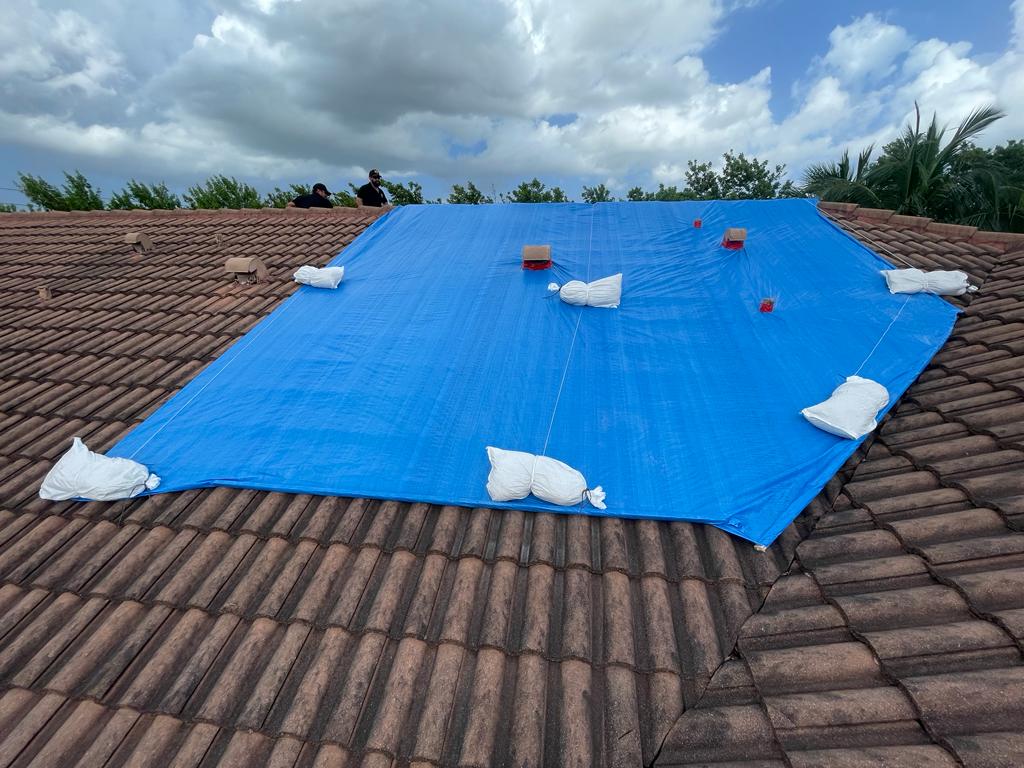
A damaged roof needs a tarp. Do not climb up yourself. Call a roofer, and a crew can secure it.
Shut off what is wet
If water is near the electrical panel or outlets, leave power off until an electrician checks it.
Report the claim
Call your insurer. Many Florida policies have a separate hurricane deductible, so ask how yours applies.
How fast does mold start after a hurricane?
Mold can begin to grow within 24 to 48 hours in damp materials, and South Florida heat and humidity are on its side. Wet drywall, insulation, carpet and cabinet bases are the first places it appears.
That is why drying matters more than looks. A wall can seem fine on the surface and still hold moisture inside. Our crews use thermal imaging and moisture meters to find it and dry it before it turns into a bigger repair.
Roof, water, then everything else
Roof first
Rain can keep falling for days after a storm. A tarp over the opening is the simplest way to avoid a second round of damage inside. See our guide to roof tarps and storm roof damage claims.
Water next
Standing water gets pumped out, wet materials are removed if they cannot be dried, and drying equipment runs until readings are normal.
Repairs last
Permanent roofing and rebuild work comes after the property is dry and your insurer has seen the damage.
When to call Frontline
- Water got inside through the roof, windows or doors.
- The roof is missing shingles or tiles, or a tree landed on it.
- Floodwater entered the building. Floods carry contamination and need a careful cleanup.
- Ceilings are stained, sagging or damp.
- You are managing a condo, HOA or commercial property with multiple units affected.
What we do when you call
Call volume rises after a big storm, so we ask the questions that decide who goes first.
- We ask about safety, the source of the water and whether the roof is open.
- Crews tarp, board up and extract water, starting with the most urgent properties.
- We run drying equipment and document the loss for your insurer.
- Frontline works with insurance companies for covered restoration work.
Common questions
What should I do first after a hurricane damages my home?
Make sure everyone is safe, then stay clear of downed lines and floodwater. Photograph the damage, shut off power to wet areas, and cover roof openings with a tarp. Report the claim to your insurer and call a restoration company quickly, since moisture left behind can start growing mold.
How long do I have before mold starts growing after a storm?
Mold can start growing in wet materials within about 24 to 48 hours, especially in Miami heat and humidity. Standing water, wet drywall and soaked insulation are the usual starting points. Getting water out and materials dried quickly is the best way to prevent it.
Does Frontline work after hurricanes?
Yes. Frontline Restoration responds around the clock across Miami and South Florida, including after storms. Our crews tarp roofs, remove water, dry structures and document the damage for your claim. During busy periods we prioritize urgent situations, so tell us if the roof is open or water is rising.
Does homeowners insurance cover hurricane damage?
Wind damage and the rain that enters through a storm opening are commonly covered, often with a separate hurricane deductible. Flood from rising water is usually a separate policy. Your policy wording decides, so ask your insurer or adjuster before assuming either way.
Want a callback instead?
Send three quick answers. We will call you. For anything urgent, calling is faster.
Call now, any hour(305) 542-5253