
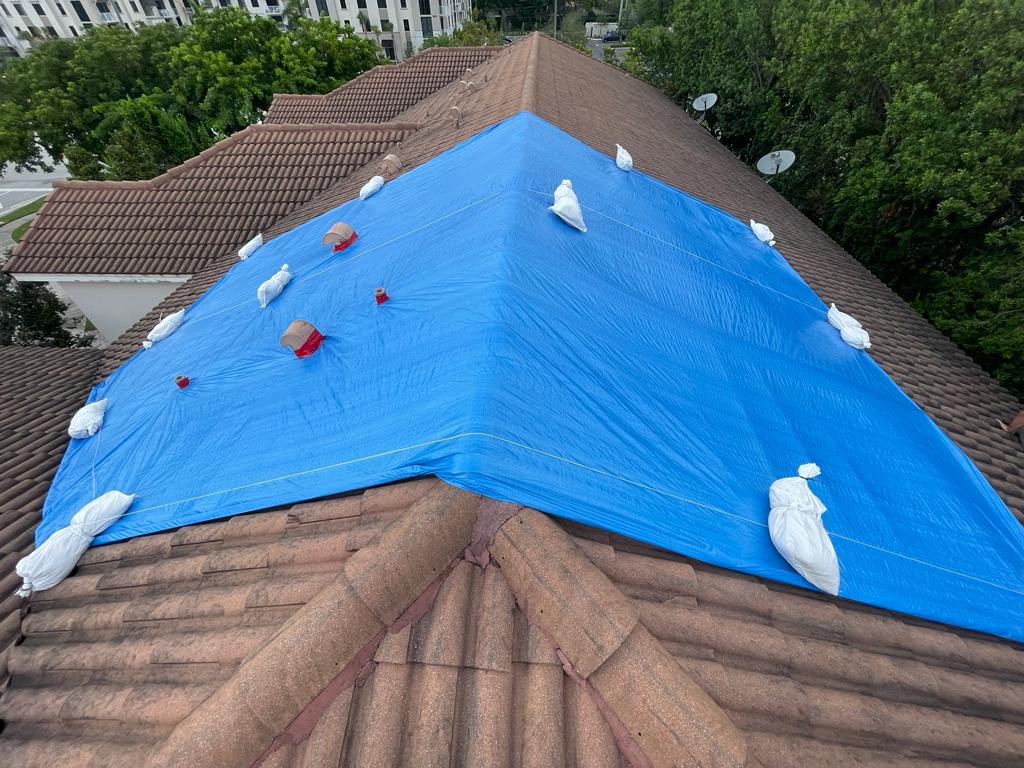
Storm Roof Damage and Your Insurance Claim in Florida
Tarp the roof first so rain stops entering, then document and file. Take photos before and after covering the damage, save every receipt, and report the loss to your insurer promptly. Wind and storm damage is often covered, while age and wear usually are not. Ask your insurer or adjuster about your policy.
Open roof tonight? A tarp stops the rain from coming in. Call any hour.
Call now, any hour(305) 542-5253Do this first after storm roof damage
Stay off the roof
Wet shingles and tile are slippery and a damaged deck can give way. Look from the ground or from a window.
Photograph from the ground
Capture missing shingles or tiles, torn flashing, fallen branches and any damage to gutters and fascia. Add the date.
Keep water out
Move belongings away from leaks, set out buckets, and call for an emergency tarp so more rain does not reach the interior.
Report the claim
Contact your insurer or agent and give them the date of the storm. Ask what they want from you before repairs.
Save every receipt
Tarping, board-up and emergency repairs may be reimbursable under your policy. Receipts and photos are how you show them.
Why tarp before the adjuster comes?
Most policies expect you to take reasonable steps to prevent further damage once a loss happens. Rain that enters through an open roof can ruin ceilings, insulation and floors, and that secondary damage is harder to explain later if the opening sat uncovered for days.
Photograph the damage before the tarp goes on, and again once it is secured. The tarp is temporary protection and does not repair anything, and it does not prevent the adjuster from inspecting the roof.
Does insurance cover storm roof damage?
Often covered
Damage from a covered storm event, such as wind lifting or tearing roofing, is commonly covered, subject to your deductible. Many Florida policies carry a separate hurricane deductible, so find out which one applies to the storm.
Often not covered
Roofs that fail from age, poor maintenance or gradual wear are usually excluded. Some insurers also apply limits or special terms to older roofs, so ask what your policy says.
Who decides
Your insurer and its adjuster decide coverage under your policy. A roofing contractor can document the condition and the repair scope. We do not promise a claim result.
What to have ready for the adjuster
- Dated photos of the roof and the interior damage.
- The storm date and how you first noticed the damage.
- Receipts for the tarp and any emergency work.
- Any prior roof repair, inspection or permit paperwork you have.
- A written description of the repair scope from your roofer.
When to call us
- Rain is coming in or the ceiling is stained, bulging or dripping.
- Tiles, shingles or flashing are missing after wind.
- A tree or debris has landed on the roof.
- You see daylight in the attic.
- You need a roof inspection to support a claim.
What Frontline does when you call
Frontline Restoration holds Certified Roofing Contractor license CCC056370 and also handles the water damage that a roof leak causes inside. We dispatch around the clock, secure the opening with a tarp, and document the roof with photographs.
We work with insurance companies for covered restoration work, and we can provide the photos and scope of work your adjuster will ask for. Permanent roof repair or replacement is a separate conversation once the property is safe.
Common questions
Should I tarp my roof before filing an insurance claim?
Yes, if it is safe to arrange. Policies generally expect reasonable steps to prevent more damage, and open roofs let rain ruin the interior. Photograph the damage before the tarp goes on, report the claim promptly, and keep the tarping receipt for your insurer.
Does homeowners insurance cover storm roof damage in Florida?
Wind and storm damage to a roof is often covered, subject to your deductible, which may be a separate hurricane deductible. Damage from age or wear usually is not. Your policy wording decides, so ask your insurer or adjuster what applies to your roof.
Who pays for the emergency roof tarp?
It depends on your policy. Many policies cover reasonable emergency protection for a covered loss, and Frontline Restoration works with insurers for covered work. Ask your insurer before the work if you can, and keep the invoice and photos either way.
Is it safe to climb on my roof to check the damage?
No. Wet or storm-damaged roofs can be slick or structurally weak, and falls cause serious injuries. Look from the ground with binoculars or your phone camera zoomed in, and let a licensed roofing contractor go up to inspect and photograph the damage.
Want a callback instead?
Send three quick answers. We will call you. For anything urgent, calling is faster.
Call now, any hour(305) 542-5253