
Before the storm, open 24/7: Hurricane preparation in Miami
Getting ready for a storm? Use this checklist now, and keep our number for the day after.
Not an emergency? Book a free inspection
Hurricane preparation checklist for Miami homes
Do the work that cannot be done once the wind arrives. Check the roof, photograph the house, read your policy, know your evacuation zone and keep a plan for what you will do after. Atlantic hurricane season runs from June 1 to November 30, so the best time to prepare is before a storm is named.
What should I check on the house before a storm?
Start overhead. Loose or slipped tile, cracked flashing and clogged valleys are where wind and rain get in first. A roof that looks fine from the street can still have aged underlayment, so a close inspection is worth doing before the season, not during a warning.
Then walk the outside. Trim branches that hang over the roof, clear gutters and drains, and put away anything that could become a projectile. Check that windows and doors close and latch properly.
Which photos and records help a claim later?
Take dated photos or a slow video of every room, the roof from the ground, the yard and the outside of the house, before the storm. Open closets and cabinets in the video. Add a short list of valuable items with a note of when you bought them.
Store copies somewhere that does not depend on the house or your phone, such as a cloud folder or an email to yourself. After the storm, the same angles show what changed.
What should I ask my insurer before the season?
Read your declarations page and ask how it handles a named storm. Many Florida policies carry a separate hurricane deductible, so find out how yours is set. Flood from rising water is generally a separate policy, and flood policies can have a waiting period before they start, so ask early.
Ask what notice your insurer expects after a loss and how to reach the claim line without the internet. Your policy wording decides what is covered. Our guide to water damage and insurance explains the usual differences.
Prepare, in order
Know your evacuation zone
Miami-Dade assigns evacuation zones. Look yours up through the county's emergency management office and decide where you would go.
Check the roof
Book an inspection if the roof is old or has had leaks. Roof inspection gives you photos and a written description.
Photograph the property
Wide and close pictures of every room and the exterior, with the date visible.
Secure the outside
Bring in furniture and loose items, trim limbs over the roof and clear drains.
Save the numbers
Keep your insurer's claim line, your agent and Frontline at (305) 542-5253 on paper and in your phone.
What we do after the storm
Once officials say it is safe, call. We tarp openings in the roof, remove water, dry the structure and document the loss for your insurer. Call volume rises after a big storm, so we ask where the water is and whether the roof is open to decide who goes first. Our after-the-storm guide covers the first day in order.
Common questions
When does hurricane season start and end in Florida?
The Atlantic hurricane season runs from June 1 to November 30. Storms can form outside those dates, but most activity falls inside them. Prepare the roof, photos and paperwork before the season rather than after a warning.
Should I tarp my roof before a hurricane?
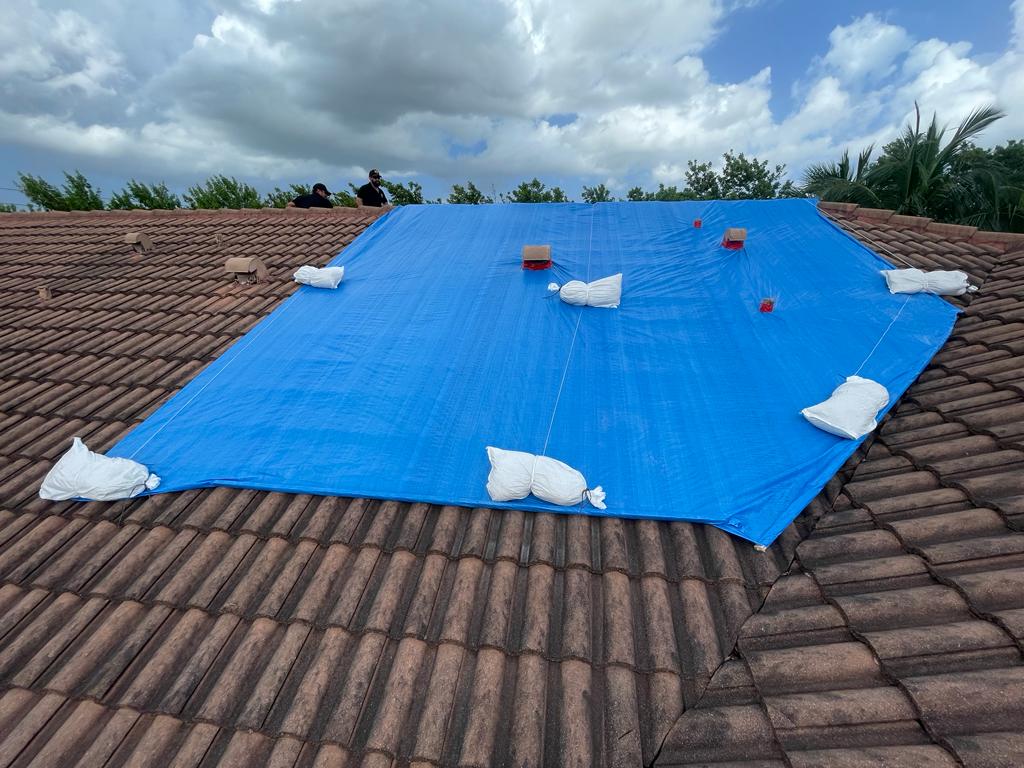
A tarp is for damage that has already happened. Before a storm, the better steps are an inspection and repairs to loose tile, flashing and drains. After a storm opens the roof, call us and we can tarp it once conditions are safe for a crew.
What photos should I take before a storm?
Dated photos or a slow video of every room, the roof from the ground, the yard and the exterior. Include cabinets, closets and valuables. Keep a copy off-site so it survives whatever happens to the house or your phone.
Does homeowners insurance cover hurricane damage?
Wind damage and the rain that enters through a storm opening are commonly covered, often with a separate hurricane deductible. Flood from rising water is usually a separate policy. Your policy wording decides, so ask your insurer or agent before the season.
Related help
Prefer a callback?
Three quick answers. We call you.