
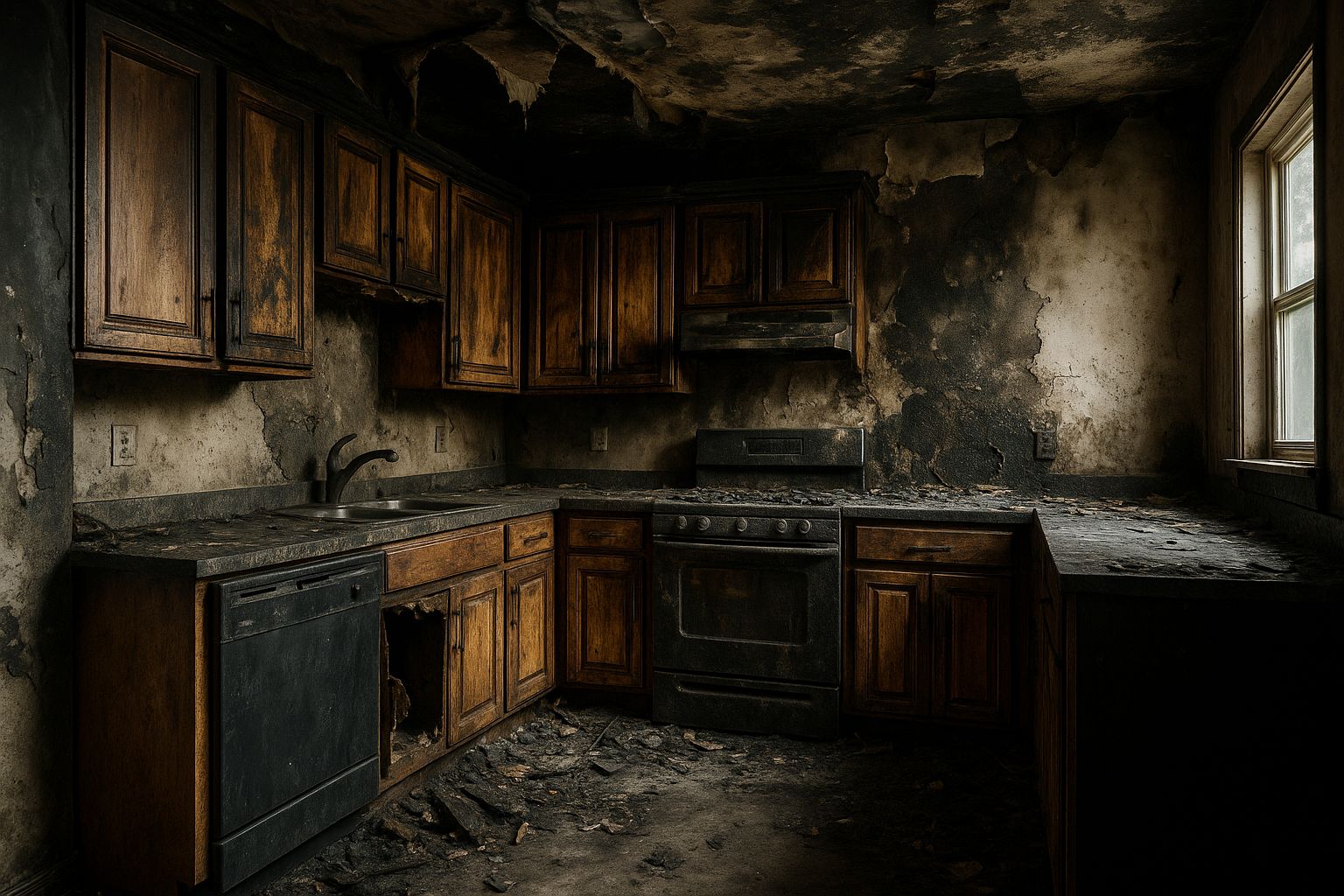
Kitchen Fire: What to Do During and After
If the fire is small and you can stay between it and the exit, cover a pan fire with a lid and turn off the heat. Never throw water on grease. If it spreads, get everyone out and call 911. After the fire department clears the home, call us for soot, smoke and water cleanup.
Fire is out and the mess is not? Call us. We handle soot, smoke and water cleanup.
Call now, any hour(305) 542-5253What should I do while the fire is happening?
Pan or grease fire
Turn off the burner, slide a lid over the pan, and leave it covered until it is fully cool. Water makes a grease fire spread, and so does flour or a fan. Baking soda only works on a small fire and takes a large amount, so a lid is better.
Oven fire
Keep the door closed and turn the oven off. The flames usually die when the air runs out.
Anything bigger
Do not fight it. Get everyone, pets included, outside, close the door behind you, and call 911 from outside. A portable extinguisher is only for a small fire when your exit is clear behind you.
After the fire is out
Wait for the all clear
Do not re-enter until the fire department says it is safe. Hidden fire inside walls and hoods can reignite.
Do not wipe the soot
Wet rags smear soot into surfaces and make it harder to remove. Leave the cleaning to us.
Skip the HVAC
Running the air conditioner circulates smoke particles through the rest of the house. Leave it off until a crew checks it.
Take photographs
Show the stove, hood, cabinets, walls and ceiling, plus rooms that look untouched. They are for your claim.
Set aside food that was exposed
Food, medicine and cosmetics exposed to heat, smoke or fire hose water are generally not safe to use. List what you discard.
Notify your insurer
Open the claim and ask about your coverage for cleanup, repairs and temporary housing.
When to call us
- There is soot on walls, ceilings or cabinets.
- The home smells of smoke in rooms away from the kitchen.
- Firefighters used water and floors or walls are wet.
- The ventilation hood or ductwork is coated with grease or char.
- You are not sure whether cabinets, flooring or drywall need to be replaced.
Why does smoke damage reach rooms the fire never touched?
Smoke travels on air and settles on everything it reaches, including closets, fabric and the inside of cabinets. Grease fires leave a sticky residue that holds odor, and a light film that looks harmless can keep a house smelling like smoke for weeks.
Proper cleanup removes the residue, treats the odor at its source and dries any water from the fire hose, so the smell does not come back when the humidity rises.
What we do when you call
- We ask about the fire, what the fire department told you and whether the home can be secured.
- A crew assesses soot, smoke and water, and protects areas that are not yet affected.
- Cleanup, odor treatment and drying start, with photographs along the way.
- We work with your insurer when a claim applies. See our fire damage claim guide.
Common questions
Should I use water on a kitchen grease fire?
Never. Water causes burning grease to splatter and spread. Turn off the heat and cover the pan with a lid, then leave it covered until cool. If the fire grows or you are unsure, leave the house, close the door behind you and call 911 from outside.
Can I clean the soot off the walls myself?
It is better not to. Wiping soot with a wet cloth often smears it deep into paint and porous surfaces, which makes it harder to remove. Photograph the damage, avoid touching it, and let a restoration crew with the proper sponges and cleaners handle it.
Why does my house still smell like smoke after the fire is out?
Smoke particles and grease residue settle into drywall, fabric, cabinets and ductwork, and they hold odor. Surface wiping rarely removes it. The source has to be cleaned and treated, and any water from firefighting needs to be dried so the smell does not return.
Does Frontline handle kitchen fire cleanup and work with insurance?
Yes. Frontline Restoration cleans soot and smoke, treats odor, and dries water left from firefighting. We document the loss and work with insurance companies. We do not decide what your carrier pays, since that depends on your policy and the adjuster.
Want a callback instead?
Send three quick answers. We will call you. For anything urgent, calling is faster.
Call now, any hour(305) 542-5253